
A name borrowed from the stage
The fedora takes its name from Fédora, an 1882 play in which the lead character wore a soft, center-creased felt hat. The silhouette was adopted by men within a decade, and by the 1920s it had displaced the stiff bowler as the default hat of the modern city.
Its genius was structural: a pinched crown and a flexible brim that could be shaped to the wearer. No two fedoras sat exactly alike, which is precisely why men kept choosing them.
The golden decades
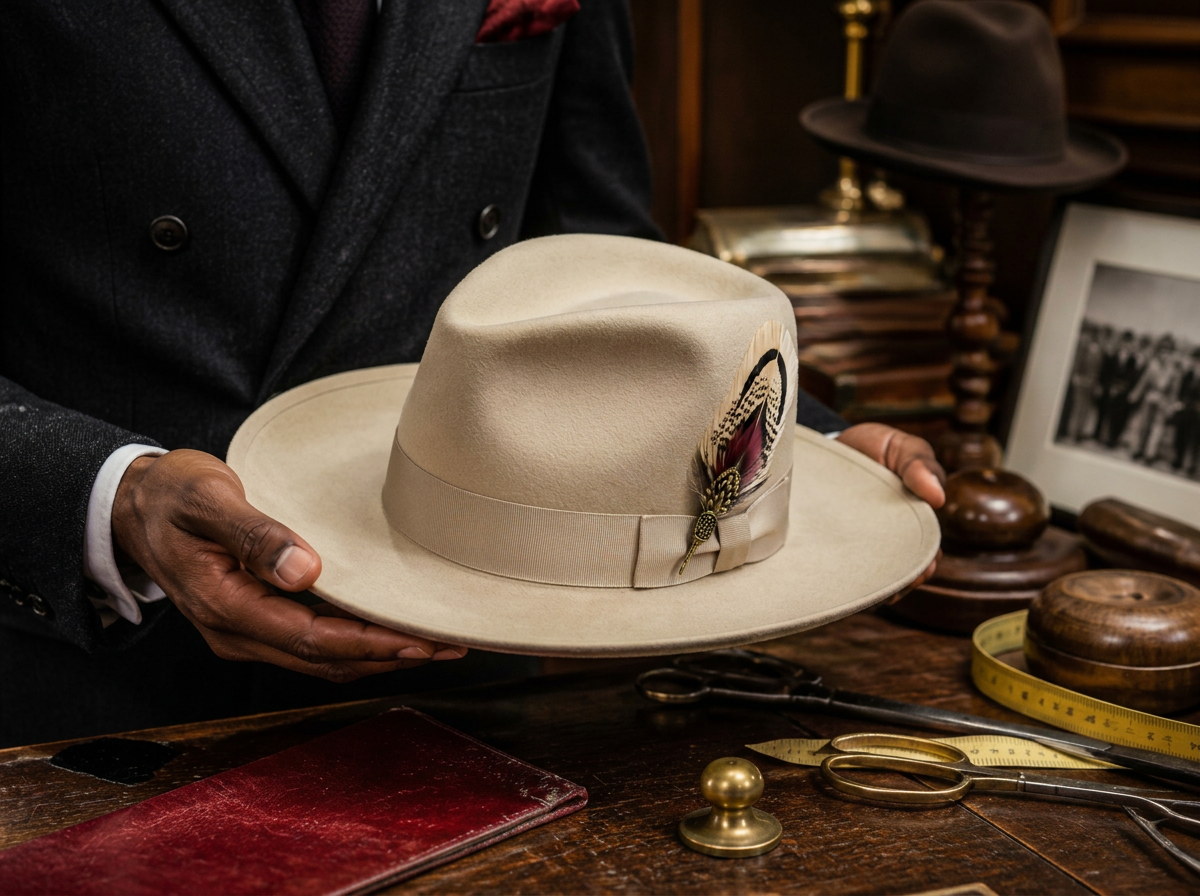
Through the 1930s, 40s and 50s the fedora was less an accessory than a requirement. Beaver felt was the standard of the trade — naturally water-resistant, lighter than wool, and known to soften with wear rather than break down. The best hats were bought once and worn for decades.
Detroit and the art of being seen
When hats faded from mainstream American dress in the 1960s, they never left Detroit. Metro Detroit built one of the most distinctive dress cultures in the country — bold colour, deliberate proportion, statement accessories, and a shared understanding that presentation is a form of respect.
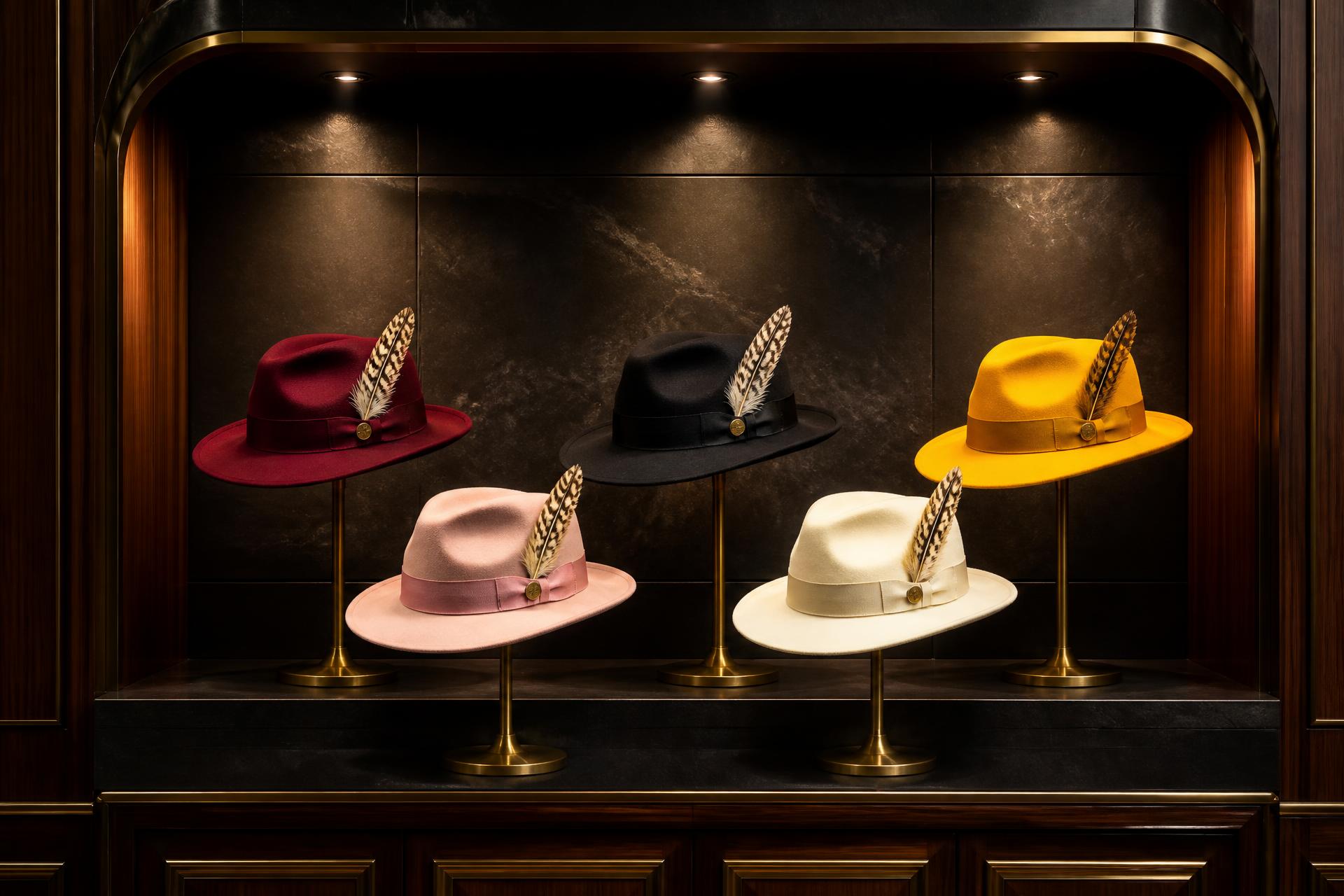
Kerry Kouture comes directly out of that lineage. The hats are not nostalgia; they are the continuation of a tradition that never stopped.
Why it still works
A fedora finishes a silhouette. It draws the eye upward, adds vertical proportion, and frames the face. It is the single fastest way to look intentional — which is the whole point.
Common questions
Answered by the house.
- Where does the name fedora come from?
- From Fédora, an 1882 play whose lead character wore a soft, centre-creased felt hat.
- When was the fedora most popular?
- Through the 1930s, 40s and 50s, when it was less an accessory than a requirement of city dress.
- Why is beaver felt the traditional choice?
- It is naturally water-resistant, lighter than wool, and softens with wear instead of breaking down — which is why the best hats were bought once and worn for decades.
Next step